
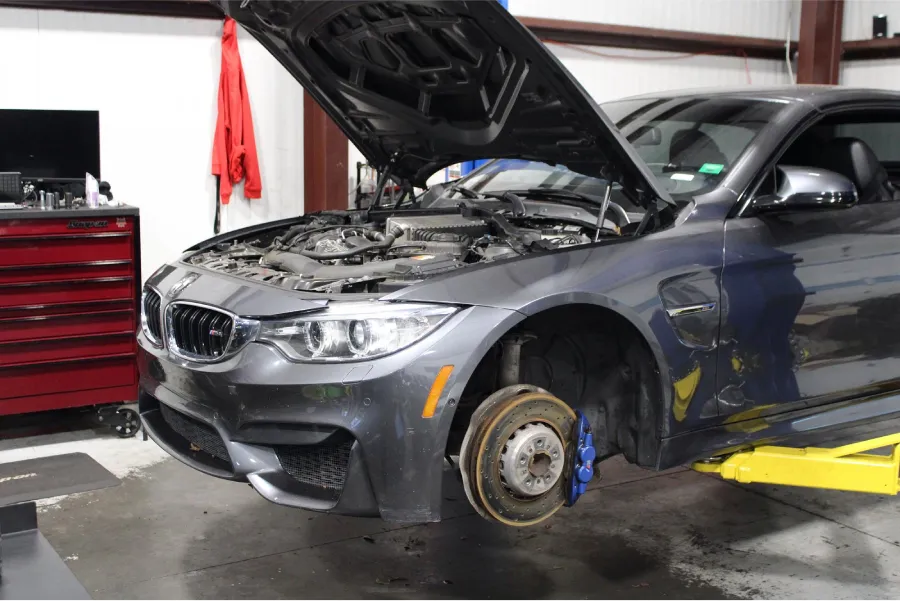
Your BMW maintenance schedule depends on the model, the engine and how you drive, so the owner’s manual and the car’s service indicator give the real answer. This guide explains what each routine service does, what skipping it tends to cause, and which symptoms mean you should book sooner.
If you want an independent shop to handle scheduled service for drivers nearby, read about BMW repair in Acworth, GA. Our shop is in Kennesaw, so Acworth is a short drive away.
Where your BMW maintenance schedule comes from
Your BMW tells you what it needs. The service indicator in the instrument cluster tracks items that are coming due. Then the owner’s manual explains what each one covers.
Because intervals vary by model and engine, a neighbor’s BMW maintenance schedule may not match yours. Also, driving habits matter. For example, short trips, stop-and-go commuting, heavy loads and Georgia summer heat all wear oil, brakes and the A/C system faster than steady highway driving.
What a BMW maintenance schedule usually includes
Most schedules cover the same core items, so here is what each one does and what happens when it gets skipped.
Oil and filter service
Every BMW maintenance schedule starts with this item.
Oil lubricates and cools the engine. However, it breaks down with heat and time. Old oil leaves deposits behind and protects less, so it can lead to worn parts and serious engine damage. Also, our BMW oil change page explains what we do during this service.
Brake inspection and brake fluid
Brake checks appear on every BMW maintenance schedule.
Pads and rotors wear down with every stop. Brake fluid also absorbs moisture over time, which can reduce braking performance. Because skipping inspections lets pads wear into the rotors, a simple pad job becomes a larger repair. Brakes are a safety system, so bring the car in rather than checking them yourself. For details, see our BMW brake repair page.
Coolant
Coolant service is also part of a BMW maintenance schedule.
Coolant keeps the engine from overheating and protects internal parts from corrosion. However, old coolant loses that protection, so neglect can lead to leaks, overheating and engine damage.
Spark plugs
Spark plugs come up later in a BMW maintenance schedule.
Spark plugs ignite the fuel mixture in each cylinder. However, worn plugs can cause rough idle, hesitation, poor fuel economy and misfires. Also, a misfire can damage other parts if you ignore it.
Cabin and engine air filters
Both filters belong on your BMW maintenance schedule.
The engine air filter keeps dirt out of the engine. The cabin filter cleans the air you breathe inside the car. For example, a clogged cabin filter weakens airflow and brings musty smells. A clogged engine filter can also hurt performance.
Tire rotation and inspection
Tires are an easy part of a BMW maintenance schedule to forget.
Rotating tires helps them wear evenly. An inspection also catches uneven wear, which often points to alignment or suspension problems. So skipping both means tires wear out sooner.
A/C system
A/C checks round out a typical BMW maintenance schedule.
A weak A/C rarely fails all at once. Instead, it usually cools less each summer. So having the system checked early helps you catch a small leak before it becomes a bigger repair.
Safe checks between visits on your BMW maintenance schedule
You can do a few simple checks yourself, and they help you spot trouble between services.
- Oil level: Some BMWs check oil electronically instead of with a dipstick, so follow the method in your owner’s manual.
- Coolant level: Look at the reservoir only when the engine is cold, because you should never open the cap on a hot engine.
- Warning lights: Note any light that stays on after startup, and then write down what it says.
- Tire pressure: Check it cold, using the number on the door jamb placard. NHTSA’s tire safety guidance explains why correct pressure matters.
Stop there. However, anything involving the brakes, fuel system, high-voltage components or lifting the car belongs in a shop.
Signs that move your BMW maintenance schedule up
Do not wait for the next interval if you notice any of these:
- Squealing, grinding or a soft brake pedal.
- A red oil pressure or coolant temperature warning. Stop driving safely, then call us.
- A check engine light, especially a flashing one.
- Rough idle, hesitation or misfires.
- A sweet smell, or fluid spots under the car.
- Weak airflow or warm air from the vents.
Also, our BMW diagnostics page explains how we trace warning lights to their cause.
Booking your BMW maintenance schedule near Acworth
First, check what your service indicator shows and note any symptoms. Then bring that information to your appointment, and we can go through what is due and what can wait.
For BMW repair in Acworth, GA and routine service, our Kennesaw shop is open Monday through Friday, 9am to 5pm. Finally, you can reach us through the contact page to book.
BMW maintenance schedule: common questions
Does a BMW that rarely gets driven still need maintenance?
Yes. Oil, brake fluid, coolant and filters age with time as well as mileage. Check your owner's manual for the time-based intervals, and mention the car's low mileage when you book.
Should I follow the service indicator or the owner's manual?
Use both. The service indicator tells you what is due on your car right now, and the manual explains what each item covers and any time limits.
What should I bring to a maintenance appointment?
Bring your service records if you have them, and note any messages on the dash, odd noises or smells. That helps the technician check the right areas first.
Can I wait on maintenance if the car feels fine?
Many worn parts feel fine until they fail. Brake fluid, coolant and spark plugs all age quietly, so a car that feels normal can still be overdue.