European car repair is not magic, but it is specific. A general shop can handle many simple jobs on a BMW, Mercedes-Benz, Audi or Volkswagen. But German cars have enough model-specific details that a shop working on them regularly makes a real difference, especially for warning lights, electrical faults, and engine, transmission or brake work.
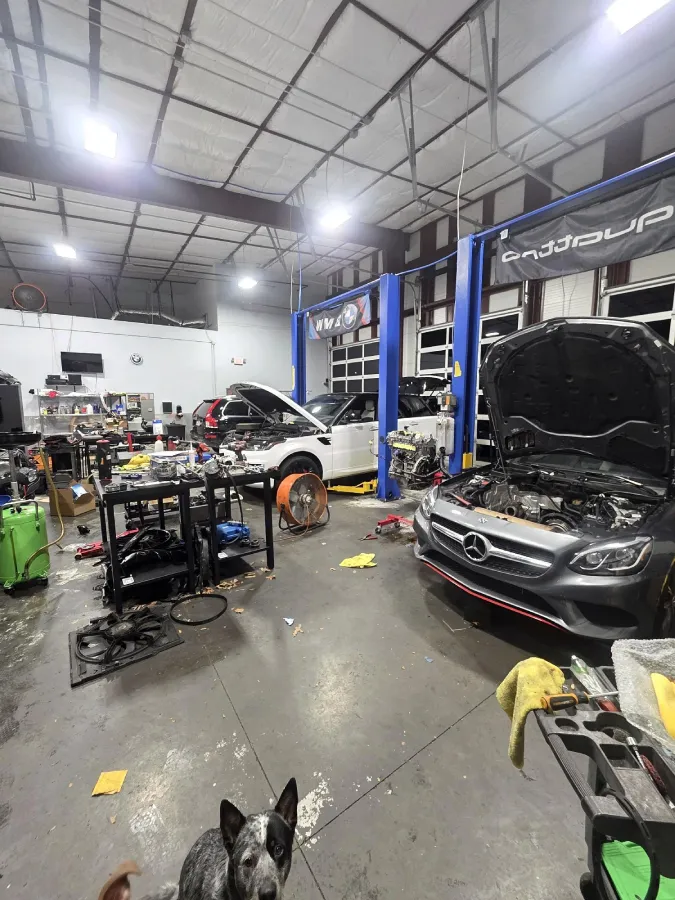
Of course, it’s not that these cars are impossible for other mechanics. Instead, the cars simply depend on specific software, specific fluids and specific procedures, and a shop that sees them every week already knows those details. If you’re looking for Kennesaw European auto repair, here is what actually separates these cars from a typical commuter.
1. European car repair starts with better diagnostic software
A basic code reader plugs in and shows engine codes. That’s useful, but German cars carry many separate control modules: engine, transmission, brakes, airbags, climate, body electronics and more. However, a generic reader often sees only the engine side.
By contrast, brand-specific diagnostic software can talk to all of those modules. It shows live data and stored faults the generic tool never displays. It also runs tests, such as commanding a part to operate, so the shop can confirm what’s failing instead of guessing.
A code is a starting point, not a diagnosis. For example, a code that points to a sensor can really come from wiring, a leak or a failing part somewhere else.
2. Fluids need an approval, not just a viscosity
Fluids are one of the easiest places for European car repair to go wrong.
On many cars, for instance, “5W-30” is enough to pick an oil. On German cars, the manufacturer usually requires oil that meets a specific approval or specification. You’ll see designations in the owner’s manual like BMW Longlife, MB-Approval 229.x, or VW 502 00 and 504 00.
Two oils can share the same viscosity, and only one of them may meet the approval your engine needs. The same goes for transmission fluid, coolant and brake fluid. Each can have a manufacturer requirement, and mixing the wrong type can cause problems.
3. European car repair often needs a reset or registration
Many German models manage their own systems electronically. After certain repairs, the car needs to be told what changed. Common examples:
- New battery: on many BMW, Mercedes and Audi models, the new battery should be registered with the car so the charging system treats it correctly. Skipping this can lead to charging problems or a shorter battery life.
- Brake pads: many models use electronic parking brakes that must be put into a service mode with software before the rear brakes are worked on.
- Service reminders: oil and maintenance intervals are tracked electronically and need resetting after service.
- Replaced modules and sensors: some need to be coded or adapted to the car before they work properly.
A shop unfamiliar with these steps can do the physical repair correctly and still leave you with a warning light.
4. Parts quality is a real choice
Part choice matters as much as labor in European car repair.
For most German models, parts come in several tiers: those from the carmaker, those made by the same supplier that built the original part, and aftermarket parts of varying quality. Some aftermarket parts fit and perform fine. Others wear quickly or trigger fault codes.
A shop that works on these cars knows which suppliers hold up. Ask what brand of part they plan to use and why.
Where a general shop is fine, and where European car repair needs a specialist
Usually fine: tire rotation, wiper blades, bulbs, basic inspections, and tire repairs.
Where specialist experience matters most:
- Check engine and other warning lights
- Electrical faults, such as drained batteries, flickering displays or intermittent problems
- Engine and transmission issues
- Brake work, including electronic parking brake systems
- Oil changes and scheduled maintenance that must meet manufacturer approvals
Questions to ask before you book European car repair
- Which German brands do you work on every week?
- How do you diagnose a warning light? Do you read all the modules or only engine codes?
- What do you do before recommending a part replacement?
A good answer to the third question includes testing and confirming the fault first. “We’ll swap it and see” is not a good answer.
The FTC’s auto repair basics guide also covers written estimates and your rights as a customer.
A safe check you can do before your visit
None of this replaces a proper European car repair diagnosis, but it helps you describe the problem clearly.
You don’t need tools for this, and it helps any shop you visit.
- Find the oil approval in your owner’s manual. Look in the section on fluids or capacities for the required specification, not just the viscosity. Write it down or take a photo.
- Note the other fluid specs listed there, such as coolant and transmission fluid.
- Write down any warning lights. Note the color, whether it’s steady or flashing, and when it appears. A photo of the dashboard helps.
- Check tire pressure and fluid levels using the manual’s instructions, with the car parked on level ground.
Leave anything involving the brakes, fuel system, high-voltage components or lifting the car to a shop. If a brake warning light is on, or the brake pedal feels different, bring the car in rather than waiting.
European car repair in Kennesaw and nearby
Blitz German Auto Repair works on BMW, Mercedes-Benz, Audi, Volkswagen and Porsche vehicles. You can see the full list of services or read about our German auto specialists.
If your car has a warning light, a new noise or a service coming due, book a visit for European auto repair in Kennesaw. The shop is at 3235 Odeon Way NW, Suite 110, and serves drivers from Kennesaw, Acworth, Marietta, Woodstock and across Cobb County.
European car repair: common questions
Is a Volkswagen or Audi really in the same category as a BMW or Mercedes?
Yes. All four are German brands, and they share the traits that make them different to work on: brand-specific software, strict fluid approvals and electronics that often need to be set up after a repair. Porsche fits the same pattern.
Is it okay to get my oil changed at a quick-lube place?
It can be, if they use oil that meets the approval in your owner's manual and handle the service reminder reset correctly. Ask what oil they will use before you agree to the work. If they only mention a viscosity like 5W-30, that is a red flag.
Should I buy a used German car without an inspection?
It is risky. A pre-purchase inspection with a full scan of the car's modules can show stored faults, leaks and wear that a test drive will not. It is most useful on cars with a long or unknown service history.
If my check engine light goes off by itself, can I ignore it?
Not completely. The fault is usually still stored in the car's memory, and the light often comes back. Have it scanned so you know what triggered it, especially if the car also ran rough or hesitated.